Fool me once, shame on… shame on you. Fool me… you can’t get fooled again.

Lately I’ve been enjoying Veritasium’s videos on misconceptions about science. From the Veritasium YouTube channel:

If you hold views that are consistent with the majority of the population, does that make you stupid? I don’t think so. Science has uncovered a lot of counterintuitive things about the universe, so it’s unsurprising that non-scientists hold beliefs inconsistent with science. But when we teach, we must take into account what the learners know, including their incorrect knowledge. That is the reason a lot of Veritasium videos start with the misconceptions.

I’ve been thinking about students’ misconceptions about mathematics. What math concepts are counterintuitive? How might starting with the misconception play out in the math classroom? Probability probably provides the most potential, from a pedagogical point of view. (Do robot graders give high marks for alliteration?) The classic Monty Hall problem or birthday problem are just two examples of this. Exponential growth can also be counterintuitive – see Chris Lusto’s alternative to the doubling penny problem.

One common misconception students have is that (a + b)^2 is equal to a^2 + b^2. In my classroom, I’d start with this misconception then have students substitute values before exploring this with algebra tiles. Not exactly Why does the Earth spin? type stuff. Still, addressing this misconception right off the bat provided us with a problem to solve – if (a + b)^2 is not equal to a^2 + b^2, then what is it equal to and why?

Recently, I was fascinated by Dan Meyer’s Coke v. Sprite question because my gut reaction was wrong. Twice. Please watch Dan’s act one video now. I’ll wait.

What fraction must you drink to balance the Coke can on edge?

My guess was that there was more Sprite in the Sprite glass than there was Coke in the Coke glass. After all, I reasoned, the Coke that was added to the Sprite also contained a small amount of Sprite.

When I did the calculations, I was surprised to learn that the amount of Sprite in the Sprite glass and the amount of Coke in the Coke glass were the same:

  • Assume the original amount of each is 100 mL.
  • Assume 10 mL of Sprite is transferred to the Coke.
  • 10 mL of pop is transferred back to the Sprite. Stirring means 10/110, or 1/11, of this is Sprite. 100/110, or 10/11, of this is Coke.
  • The amount of Sprite in the Sprite glass is now 90 mL + (1/11)*10 mL = 90 10/11 mL.
  • The amount of Coke in the Coke glass is now 100 mL – (10/11)*10 mL = 90 10/11 mL.

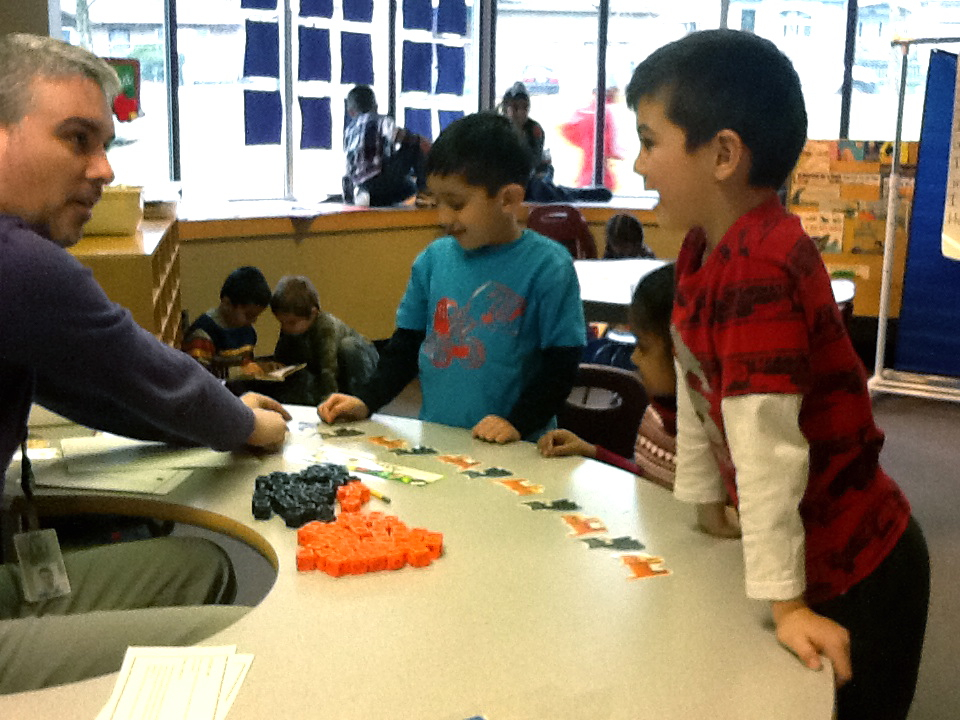
Before watching Dan’s act 3 video, my colleague Shelagh Lim and I modelled this with colour tiles:

  • Start with 12 green tiles on the left and 12 red tiles on the right.
  • Move 4 green tiles to the right. Now, 4/16, or 1/4, of the tiles on the left are green. 12/16, or 3/4, are red.
  • 4 tiles are moved back to the left. To simulate the effect of stirring, 1 of these 4 are green. 3 of these 4 are red.
  • The number of green tiles on the left is now 8 + 1 = 9.
  • The number of red tiles on the right is now 12 – 3 = 9.

Shelagh asked, “What if you don’t move back 1 green and 3 red? What if you close your eyes and take out 4 random tiles?” In other words, does stirring matter? I argued it did. “Something something proportions,” I said.

Mind. Blown.

I want students to experience this feeling of enjoyment at being led astray by their intuition. But, more importantly, students must also experience the feeling of enjoyment that comes from following their intuition and being correct. The former is not possible without the latter; to be amused by failure, there needs to be an expectation of success.

I see math, people

Last Friday night, while the rest of the world was lining up to see The Avengers, I took my daughters to see The Pirates! Band of Misfits. Our hero, The Pirate Captain, desires to win the Pirate of the Year Award. He explains to his rag-tag crew, “Every time I’ve entered I’ve failed to win, so I must have a really good chance this time.” The gambler’s fallacy! In a children’s movie, no less. [The gambler’s fallacy is the belief that previous failures indicate an increased probability of success on subsequent attempts. It’s why I renew my (share of) Canucks season tickets every year.]

Fast-forward to Tuesday, lunch. I’m in the line-up to pay for my fish taco when I spot this¹:

“I like rice. Rice is great when you’re hungry and you want two thousand of something.” – Mitch Hedberg

I immediately ask myself, “How many Rice Krispies is that?” Other (more interesting?) questions soon follow:

  • “What size of Rice Krispie square could you make with these?”
  • “How many big marshmallows would I need to make this giant Rice Krispie square?”
  • “How many calories would that be?”
  • “How many ‘Snap, Crackle, Pops’ could I expect from 22 lbs of Rice Krispies?”

These sequels/extentensions offer more than “How many Rice Krispies are there in 50 kg?” In addition to proportional reasoning, there are connections to volume and probability.

I’ll upload this to 101questions. I’m curious if other math teachers will find it perplexing but that’s not really what’s important to me. What is important is that I’m starting to see math everywhere.

I blame Dan Meyer.

¹ From ages 15 to 24 I worked as a grocery clerk at Safeway. Sometime during a new hiree’s first shift, we’d ask him to run and do a price check on some seemingly mythical item such as pork wings, ice mix, or a 20 kg bag of puffed wheat. Huh. Who knew?

It’s pronounced ‘soobitizing’

Subitizing – two years ago, I had no idea what it was.

In September 2010, I was asked to do my first demo lesson as Numeracy Helping Teacher. In a Kindergarten classroom. I taught Math 8 to 12. I was terrified a little nervous. Thankfully, Sandra Ball was there to hold my hand provide moral support. In these last two years, I have become much more comfortable in primary classrooms. And I can pronounce subitizing and tell you what it is – it’s recognizing, without counting, one to five objects (“1, 2, 3, What do you see?”).

That’s me. The one on the left.

This year, it has been very rewarding to support Surrey Kindergarten/Grade 1 teachers with an assessment package developed by Carole Fullerton and Sandra Ball. “What Do They Know?” focuses on three areas: subitizing, partitioning/decomposing, and patterning. In addition to fall and spring assessment tools (instructions, blackline masters, materials, rubrics), an instructional resource with suggestions for subitizing, partitioning/decomposing, and patterning lessons is also included. Carole and Sandra wrote about WDTK in a special elementary mathematics issue of BCAMT’s journal, Vector. Please read the article here.

With all-day-K in effect this year, the timing is perfect. There is time (It is time?) to focus on early numeracy. The number of Kindergarten teachers in Surrey has almost doubled this year, many of them teaching Kindergarten for the first time.

WDTK provided me with opportunities this year to work with K/1 teachers. When teachers invited me into their classrooms, I asked them to choose three kids. Then, I modeled each of the three assessment tasks with these three students. After, the teachers and I discussed the results. It was common for these teachers to be surprised by their students. Often students who were identified as struggling demonstrated capacity in at least one of the three areas. Sometimes these students even outperformed their high-achieving classmates. Later, these teachers were able to complete the assessment tasks on their own with the remaining kids.

I look forward to spending more time in Kindergarten classrooms – every secondary math teacher should get the opportunity at some point in his or her career.

Ask an Expert (Teacher Edition)

It can be challenging to plan activities for workshops with secondary math teachers. I like to have teachers first experience learning mathematics as my students do. There’s the rub – if I share an activity from my classroom, teachers already know the math. They can opt out of explorations designed to construct understanding – they know how the story ends.

Marc Garneau (@314Piman) and I have two strategies to deal with this. First, we can have teachers look at a familiar topic in a new light. For example, have teachers:

A second strategy is to have teachers solve a problem that is similar, but not too similar, to something they teach. For example, I wanted to model how I use expert groups to have students develop the exponent laws in Math 9. Having teachers do this would be iffy. Instead, Marc and I came up with this:

Each expert group of teachers was responsible for learning and teaching one set of ‘pop’ rules. For example,

(a + c) ‘pop’ (b + d)
= 2(a + c) + (b + d)
= 2a + 2c + b + d
= 2a + b + 2c + d
= (a ‘pop’ b) + (c ‘pop’ d)

0 ‘pop’ a
= 2(0) + a
= a

Later, we asked “Okay, so ‘pop-ifying’ is not in the WNCP curriculum, but where could you use this teaching strategy?” Teachers answered “It would be great for teaching exponent rules or log laws.”

Mission accomplished.

My 7-year-old daughter keeps beating me at Spot it!

I have an excuse. While playing, I start thinking about the mathematics behind the game rather than the cards in front of me.

The goal of Spot it! is to be the fastest player to spot and call out the matching symbol between two cards. There are 55 cards, each with 8 symbols. Between any two cards there is one, and only one, matching symbol. How did the designers accomplish this? Sue VanHattum explores this question on her blog, Math Mama Writes.

In addition to thinking “How did they do that?” I started thinking about creating a smaller math version of Spot it! What if, rather than symbols, students matched equivalent expressions? A game might consist of 21 cards, each with 5 expressions (e.g., \sqrt {64}, 2^{3}, \dfrac {4} {3}\div \dfrac {1} {6}, \left( -2\right)\left( -4\right), and 8).

I began by creating 7 cards, each with 3 letters. While I was trying to create 13 cards, each with 4 letters, I finally asked “Why am I doing this?” Okay, so the game might be fun for some students, but would it increase their conceptual understanding? Of course not. We’re talkin’ about practice.

I have decided to walk away from creating these types of activities. It won’t be easy. The card stock! The laminator! The paper cutter! I love these things more than a grown man should. I’m quitting. Cold turkey.

But first, check out my latest Tarsia jigsaws…


factoring trinomials tarsia (normal)
factoring trinomials tarsia (larger)
factoring trinomials tarsia (solution)


rational exponents tarsia (normal)
rational exponents tarsia (larger)
rational exponents tarsia (solution)

A Linear Functions Lesson Across the Grades

How many people can sit at 100 (or n) triangular tables? Square tables? Hexagonal tables? What if you join the tables so that one side of the next table touches one side of the previous table?

I appreciate this problem for a few reasons:

  1. I can present it in grades 4 through 10. In grade 4, students write a recursive relationship (e.g., for joined hexagonal tables, start at 2 and add 4 each time). In grade 6, students write a functional relationship (e.g., 4n + 2). In grade 8, students graph a linear relation (e.g., y = 4x + 2). In grade 10, students interpret the slope and y-intercept (e.g., each added table provides 4 additional seats, there are 2 additional seats at the ends of the table). When I teach and discuss this lesson at different grade levels within a school, I think a common activity helps teachers connect the big ideas across the grades.
  2. I can easily adapt and extend the task. When I have taught this lesson in grade 6 (see three-part lesson plan), most students can write an expression for joined square or hexagonal tables. Some students may choose to solve a simpler problem and write an expression for joined triangular tables. Other students can be challenged to write an expression for tables with any number of sides. All students can participate in the class discussion.
  3. The use of pattern blocks can help students gain a deeper understanding. Most students were able to make sense of the 4 in 4n + 2. Each time a table is added to an end, 4 seats are added. (Two seats are lost when tables are joined.) When one student showed how he added tables to the middle rather than an end, this helped his classmates make sense of the 2 in 4n + 2. There are two more tables at the ends. Pattern blocks allow students to make sense of the expression beyond “add 2 to make the numbers in the table of values work”.

This problem appears in several resources including The Super Source.

Ask an Expert

This was my go-to review activity. I picked it up at an un-unconference as a student teacher.

First, have students get in groups of four. This is their home group. Have students number themselves from one to four.

Home Groups

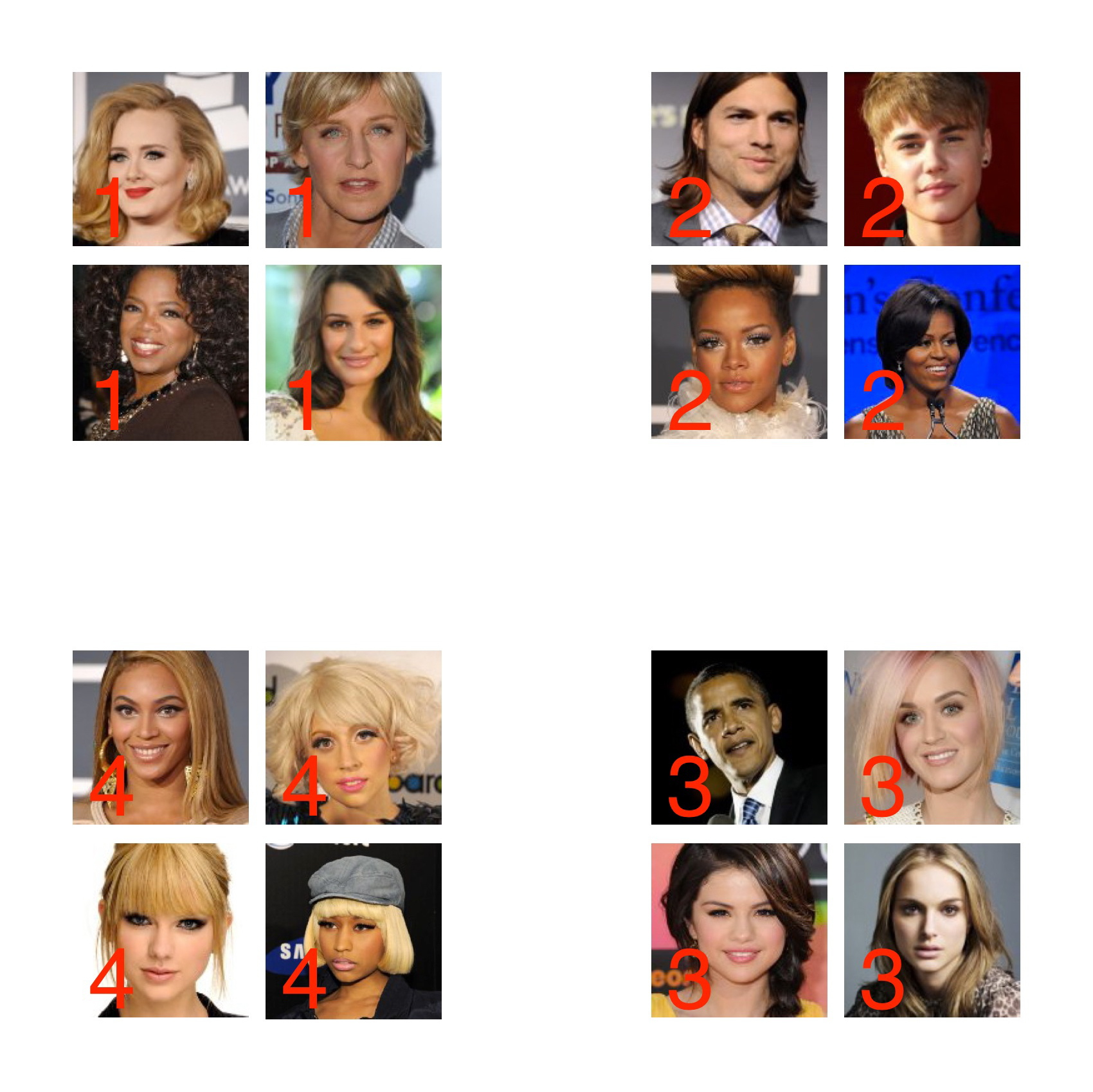
Have students move and form groups so that each student in the group has the same number. This is their expert group. Each expert group is responsible for one part of a review assignment, such as this. For example, the 1’s (Adele, Ellen, Lea, and Oprah) may be responsible for becoming experts on solving quadratic equations by factoring, the 2’s on solving using the square root method, the 3’s on solving using the quadratic formula, and the 4’s on the nature of the roots. Emphasize that each member of the group must understand and be able to explain the solution to each question in this part of the assignment. I play up that I will only help students while they are in their expert groups.

(Classroom Management Tips: Ask just the first four home groups to move and form their expert groups. Have the remaining home groups remain seated until this is complete. You will be able to see if each student is moving to the correct group. I’ve used this activity in classes of 24 to 32 students. Plan for this. For example, 12 students will form three home groups of three and will move to form four expert groups of three.)

Expert Groups

Have students return to their home groups to complete the assignment. If any student needs help with any question, he or she is sitting with an expert. For example,

  • Ashton needs help factoring when the leading coefficient is not equal to one?
    Adele’s an expert.
  • Barack has difficulty using the square root method when there are brackets?
    Ask Ashton.
  • Beyonce struggles with simplifying expressions when using the quadratic formula?
    Barack knows.
  • Adele can’t remember which condition results in two equal real roots?
    Beyonce can help.

I may have gone to the well one too many times with this as a review activity. Time to try Kate Nowak’s speed dating activity. Also, I’d like to use expert groups to have students learn, rather than review, concepts. I’ve used this activity, with some success, to teach exponent laws in Math 9.

A Leibniz-Newton Moment

As I was about to hit publish on this post, Mathy McMatherson published his own post on expert groups. He even mentioned @k8nowak’s speed dating. Please read his post for a more in-depth reflection on expert groups and jigsaw activities in general.

Tarsia Jigsaws

Last year, one of my former student teachers told me about Tarsia, a software program that allows teachers to create jigsaws (and more). He remembered that I created similar jigsaws using MS Word (no small feat) and experienced this joy himself as a new teacher. I wish I knew about this tool several years ago.

Tarsia includes an equation editor for entering matching expressions. Teachers may also enter distractors so that corner and edge pieces are not easily determined. The activity cards are scrambled when outputted, ready to be cut out by students.

Here’s one that I quickly created:
logarithms jigsaw (normal)
logarithms jigsaw (larger)
logarithms solution

In my classroom, I often used jigsaws to review a topic. In addition to providing students with opportunities to practice, these activities get students talking mathematically. As a teacher, I am able to listen to students making mathematical arguments about whether or not pieces fit together and observe them checking and revising their work. Also, eavesdropping on these mathematical conversations will tell me if there are topics that need to be discussed further (e.g., rational exponents).

Formulator Tarsia (for Windows only) can be downloaded here.

One of these things is not like the others

When you read the title of this post, did you think Sesame Street? Foo Fighters? Or, like me, both?

Recently, Geoff shared seven (sneaky) activities to get students talking mathematically. One activity, ‘odd one out’, involves having students pick the one mathematical thing that doesn’t belong. This reminds me of one strategy used by Dr. Marian Small to create open questions – asking for similarities and differences.

Here’s my ‘odd one out’ question:

Which of the following quadratic functions doesn’t belong? (Dr. Small might ask “Which of these four functions are most alike?”)
y=2\left( x-1\right) ^{2}+3
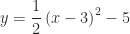
y=\dfrac {1} {2}\left( x-3\right) ^{2}-5
y=3\left( x+2\right) ^{2}-4
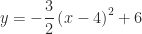
y=-\dfrac {3} {2}\left( x-4\right) ^{2}+6

Students might say,
y=2\left( x-1\right) ^{2}+3 because it does not cross the x-axis
y=\dfrac {1} {2}\left( x-3\right) ^{2}-5 because it is a vertical compression of y = x²
y=3\left( x+2\right) ^{2}-4 because it is a horizontal translation to the left
y=-\dfrac {3} {2}\left( x-4\right) ^{2}+6 because it opens down

Do the graphs of these functions strengthen your choice or make you change your mind?

I carefully chose the values of a, p, and q in y = a(x – p)² + q so that students could reasonably argue that any one of the functions could be picked as the odd one out. Because I am not looking for one particular answer, each student should be able to confidently answer the question and contribute to a mathematical discussion. Planning disagreement is key; it means students will have to justify their mathematical thinking.

Sneaky.

Communicating Effectively?

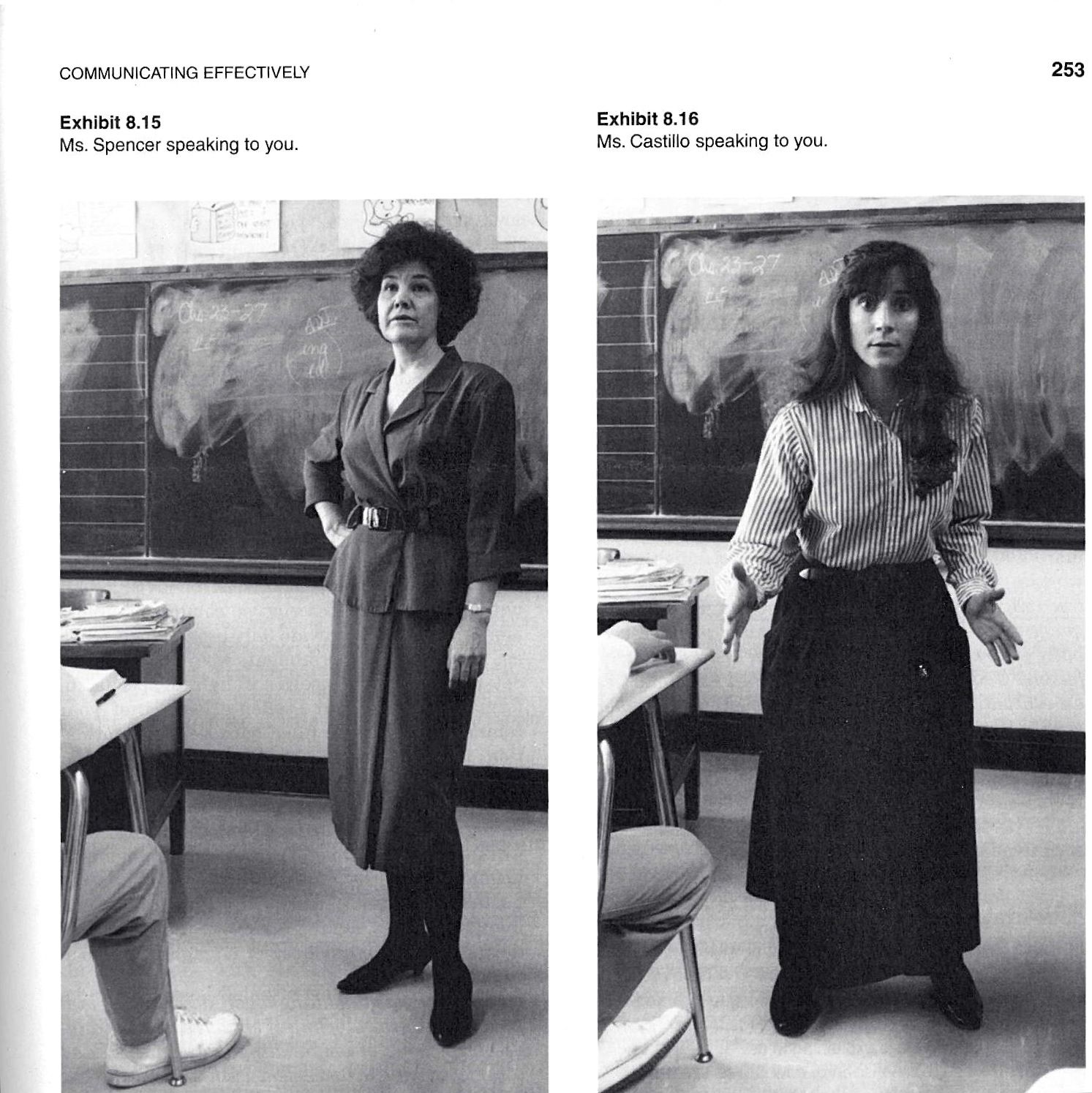
From my textbook I had as a student teacher taking my teaching mathematics course:

“Ms. Spencer’s body language suggests that she doesn’t take what she’s saying seriously enough to face her listeners. Ms. Castillo’s body language clearly tells her students, ‘I’m talking to you and I expect you to be listening to this important message!'”

“Managing to focus your eyes on each student regularly during the course of classroom activities, and occasionally making positive expressions and gestures (a smile, a wink, a thumbs up) when you’ve caught the student’s eye, helps establish an atmosphere of mutual respect.”

I don’t know. I think Ms. Spencer’s body language suggests she is asking “You think you’re better than me?!” I think Ms. Castillo is saying “It’s go time!” Am I the only one who wants to shout “Mandelbaum! Mandelbaum! Mandelbaum!”? Ms. Castillo may have an important message. Her students may also have something important to say. Maybe this wasn’t an important point to make back in ’96.

Not sure I’d recommend winking at students who’ve caught your eye.

Maybe Sal Khan is on to something when he says “the face is hugely distracting”. I know mine is.